Experience, not just a dream…
Experience matters. We need leaders who can work with everyone, not just advocate or dream. They must know how to get things done and understand our state and national issues, not just make empty promises. While many candidates may have passion, influencing policy is more than activism. It takes patience, grit, and the ability to hold difficult conversations on tough issues.
-
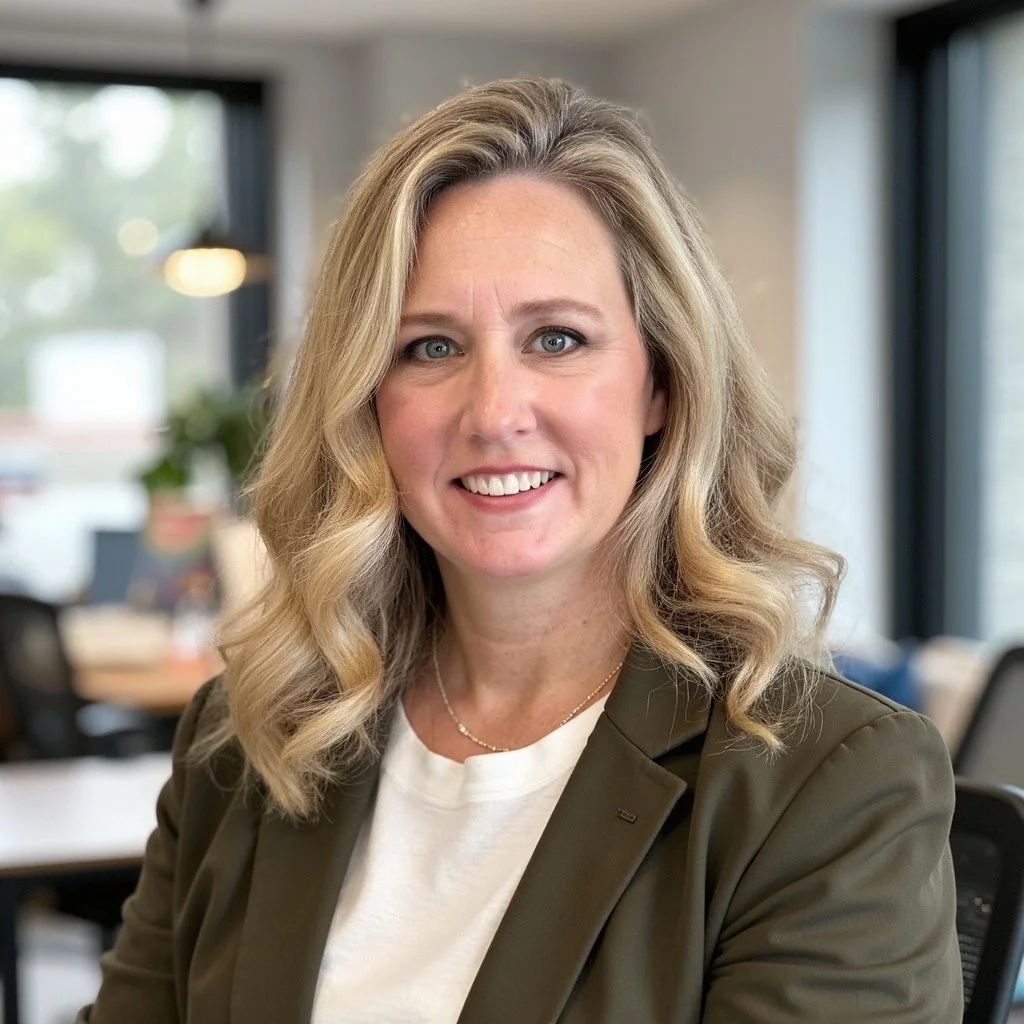
I am your neighbor and a longtime Grimes resident of more than twenty years, a proud mother of six and a Licensed Independent Social Worker in Iowa. I miss Fortune Gardens egg rolls and love our towns unique charm. I have witnessed our communities grow from small towns into rapidly expanding suburbs, and I have seen firsthand how families are left behind when our systems fail to keep pace.
For nearly 30 years, my work as a clinical and systems‑level social worker has placed me alongside families navigating Child Protective Services, family and criminal courts, and the child welfare system. Through my private practice, court‑involved services, and expert testimony, I see both the harm caused by broken systems and the extraordinary dedication of the professionals working within them. I helped create training to expand access to infant and early childhood mental health care because families cannot wait for better outcomes, they need action now.
I also know that families cannot thrive without affordable, accessible health insurance or strong public schools. Too many Iowans are forced to choose between care and cost, and too many classrooms are stretched beyond their limits. I am committed to reforming our health insurance options so families can access care when they need it, and to fully funding public education so every child—no matter their zip code—has the opportunity to succeed.
My experience, in Iowa and across multiple states, has shown me that meaningful change happens at the state level. Iowa has the power to do better for its children and families today. I am ready to fight for systems that work, policies rooted in compassion and accountability, and a future where families are supported long before they reach crisis.
-
I’ve spent a portion my career directly working in healthcare, including my private practice today. I have spent time working in emergency rooms, ICU’s, mental health units, and corporate medicine, including for two of Iowa’s largest insurance companies. From 2015–2019, I was directly involved in Iowa’s Medicaid Managed Care transition, working alongside state officials and traveling across Iowa to help providers. From solo practices, community agencies supporting our waiver programs, to major hospital systems to help them navigate the new system. I also conducted real Fraud, Waste, and Abuse investigations, giving me a clear view of how healthcare actually works behind the scenes, and the corruption involved from our own State agencies and manage care companies. It’s not the polished version we’re sold.
It’s important to be honest about our history: before managed care, Iowa’s Medicaid system was never truly “state run.” Much of it was contracted out to billion‑dollar, for‑profit private companies like Maximus, who we still hold contracts with today. The difference we are hearing about isn’t public versus private. It was already run by private companies under the State’s name. We need a new system with accountability, transparency, and a design that supports Iowan’s and healthcare providers to stay in our state.
Today, managed care is failing Iowans. Instead of improving outcomes or controlling costs, it has added layers of bureaucracy that delay care, deny necessary services, and push providers out of the system. At the same time, commercial insurance companies are squeezing Iowans from both sides: charging inflated premiums while underpaying providers and denying claims at alarming rates. Patients pay more, providers get less, and insurers walk away with record profits.
Most Iowans don’t realize how much local influence they actually have over their healthcare, while too many legislators still don’t understand how the insurance industry truly works, or how their decisions directly affect care in our communities.
Gender‑affirming care isn’t just about LGBTQIA+ communities. It includes menopause and perimenopause care, hormonal care for men, fertility services, and supporting Iowa families. Abortion is healthcare. Yet fear‑based rhetoric and misinformation have led to some of the most restrictive and medically harmful laws in the country. The result? Iowa struggles to attract and retain qualified healthcare professionals, especially in women’s health, while still expecting young families to stay and grow here. With two major medical schools, we should be doing better.
This isn’t theoretical. Iowans are already traveling out of state for essential care like epilepsy treatment It’s called Medical Tourism, because we can’t keep trained providers here. That should concern all of us. Especially with our rapidly increasing cancer rates.
-
Iowa is hurting, and we all feel it. Because behind every statistic is a parent, a neighbor, a coworker, or a friend hearing the words “you have cancer.” The data is clear and deeply alarming: for the 2018–2022 period, Iowa had the second-highest rate of new cancer cases in the United States and was one of only two states where cancer incidence is still rising. A trend moving in the wrong direction while much of the country improves.
This crisis is personal in Iowa House District 46, because the district includes Dallas and Polk County, where local reporting based on Iowa Cancer Registry data shows the county’s cancer incidence rate is some of the highest. We cannot accept this as “normal.” We cannot let these numbers become background noise. Iowa deserves urgent, sustained action rooted in prevention, early detection, and accountability because the cost of delay is measured in lives, and the people behind these statistics deserve better.
The CDC and National Cancer Institute’s state profile data shows Iowa’s age-adjusted cancer incidence is 498.8 cases per 100,000 people, far above the U.S. rate of 448.6, a gap that represents thousands of families facing diagnoses that change everything. And this isn’t confined to a single pocket of the state: reporting citing state statistics notes that 87 of Iowa’s 99 counties have cancer rates above the national average, meaning almost every community is carrying this burden.
Statistical References
Interim Findings Report, Key Drivers of Cancer in Iowa Project (February 2026), University of Iowa College of Public Health.
State Cancer Profiles: Iowa (Age-adjusted incidence, 2018–2022), CDC / National Cancer Institute.
Local reporting noting county-wide impact (87 of 99 counties above national average).
Polk County local cancer incidence comparisons (rate per 100,000; estimated annual diagnoses), based on Iowa Cancer Registry data as reported by local outlets.m description
-
I’ve lived in Iowa long enough to know this fear isn’t abstract. It’s wondering what’s in the water you drink every day and what’s in the air inside your own home. From preparing a baby’s formula to the food we eat and the soil it’s grown in, our environment impacts us infinitely. The EPA has identified Iowa as one of the highest‑risk states for radon, an invisible cause of lung cancer, and the Environmental Working Group has documented nitrate contamination moving quietly into our drinking water. These risks don’t come with warnings. Families find out only after someone gets sick.
This is not about blaming farmers. Iowa’s farmers care deeply about their land and their communities. They are not the problem, they are essential partners. The real failure is a system that demands production without protection, strips away monitoring, and leaves families and farmers without the support needed to prevent harm.
I’ve seen how this collides with another reality: too many Iowans are under insured, uninsured, or living hours from a healthcare provider. When exposure increases cancer risk or chronic illness, early care matters—but access is often delayed or out of reach. No family should have to choose between testing their water, fixing their home, or seeing a doctor.
My education in both social work and public health has taught me that these are not separate problems. Water, air, agriculture, and healthcare are one integrated system. When that system fails, people pay the price. Iowa can do better by protecting public health, supporting farmers, and building systems that keep families safe before harm happens.
Data centers and advanced computing facilities do not have to be a threat to Iowa’s future or environment. When done right, they can be part of it. But growth without responsibility is not progress, it is extraction.
If data centers benefit from Iowa’s land, water, energy, and public incentives, they must also help strengthen the systems they depend on. That means reinvesting in local infrastructure, helping modernize the electric grid, protecting water resources, and being transparent about environmental impacts. Communities should not be left paying the long‑term costs while corporations walk away with the profits.
Iowans are not opposed to innovation. We are opposed to being ignored. We believe economic development should lift communities, not drain them. With clear standards, real oversight, and meaningful community investment, data centers can support jobs, resilience, and long‑term sustainability. Without those commitments, they risk becoming another burden on an already‑stressed environment and infrastructure.
-
I have taught as an adjunct professor in DMACC’s High School Career Education program. I’m a candidate who has actually been in a classroom with our high school students. My husband is a Program Chair and instructor in Robotics, Control Systems, Electronics, Engineering and Technology, and Industrial Technology at DMACC. Together, our firsthand experience across secondary and post-secondary education has given us a clear view of where our system succeeds, and where it urgently needs reform.
Iowa must recommit to fully funding public schools and meaningfully supporting teachers. Educators need the autonomy to teach and the trust to lead their classrooms. The growing politicization of education has pulled focus away from what matters most: student learning. Restoring funding for AEA’s is essential so students receive the specialized support they need to succeed. Not placing them in a separate school. Academic rigor and trauma‑informed practices are not competing priorities. They are complementary. After experiencing a shelter‑in‑place during an active shooter incident near my classroom in 2022, I know firsthand that schools are being asked to do the impossible: protect students, maintain learning, and manage trauma with inadequate resources. This is unacceptable. We can fund public schools, ensure safety, and provide student support. These goals are not mutually exclusive.
The school voucher program was introduced to advance a narrow and harmful agenda, but now the reality of it’s impact is far more complex. Families across the political spectrum now rely on it, and it is deeply embedded in Iowa’s education system how it’s designed today. Pretending it can simply be undone ignores that reality. What Iowa needs now is accountability. This includes audits, transparent funding reviews, income limits, sliding‑scale contributions, and clear expectations for private schools receiving public dollars. While some private schools are for-profit and serve affluent families and thrive, others are non-profit and educate low‑income, immigrant, refugee, and ESL students and struggle to survive. Vouchers have historically contributed to segregation, but with intentional oversight and reform, Iowa has the opportunity to do better and fund our public schools.
Homeschooling options also require stronger safeguards. While homeschooling can be a valuable and appropriate choice for many families, the current lack of oversight leaves some children academically vulnerable and invisible to mandated reporters. As a therapist and mandatory reporter working with court‑involved families, I have seen how unregulated home school pathways can be exploited to conceal abuse. Iowa currently allows home school options with no reporting requirements at all, placing children at risk. Reasonable monitoring is not an attack on homeschooling, it is a necessary step to ensure every child is safe, supported, and receiving an education.
-
In response to the Iowa DOGE workforce recommendations released in 2025, I’m concerned that the proposed shift toward employer‑led training models risks undermining the very systems that have consistently delivered results for Iowa’s workforce. Namely community colleges and established, union‑supported apprenticeship programs. Iowa’s DOGE report recommends employers receive funding over community colleges and union based apprenticeships.
Community colleges like DMACC already have a strong track record of success working directly with Iowa’s manufacturing industry. They partner with employers to provide hands‑on training in skilled trades, automation, robotics, emerging AI technologies, among many other areas; training that happens on factory floors and in modern labs, not just in engineering classrooms. These programs are designed for real Iowans: working adults, rural residents, veterans, and career‑changers. Through flexible formats such as short‑term credentials, hybrid instruction, employer on-site classrooms, and industry‑recognized certifications, community colleges have helped manufacturers adapt to change while keeping workers employed in Iowa. This is about shifting skills, not replacing workers, and it’s an approach that has proven effective over time.
At the same time, redirecting funding away from established apprenticeship models toward narrowly employer‑controlled programs to help big business executives put more money in their pockets raises serious concerns—especially when it comes to worker safety and training quality. Union‑supported apprenticeships have long provided standardized curricula, clear skill progression, portable credentials, and rigorous safety training that protects workers in high‑risk manufacturing and skilled‑trade environments. These safety standards are not optional extras; they are built into apprenticeship structures and enforced consistently. When training is driven primarily by short‑term employer needs, safety instruction, credential portability, and long‑term workforce development are often the first areas to be reduced or cut.
If Iowa truly wants to strengthen its manufacturing workforce and retain skilled workers, the solution isn’t to sideline community colleges or weaken union apprenticeships. It’s to protect and invest in the proven systems already serving Iowa well: systems that balance employer needs with worker safety, long‑term career pathways, and statewide economic stability.
-
Every year, Iowans work hard, raise families, and care for one another. Yet we watch hundreds of millions of our own dollars leave the state because our laws refuse to catch up with reality.
In Illinois, legal cannabis generated over $2 billion in sales and more than $490 million in tax revenue in 2024, including over $385 million from out‑of‑state buyers. Money largely coming from Iowans crossing the border because they have no legal option at home. Missouri, since legalizing recreational cannabis in 2023, now collects nearly $70 million every year in cannabis tax revenue. This is funding veterans’ care, health services, and community reinvestment. That’s Iowa money supporting other states’ priorities instead of cancer research, healthcare, and public schools here at home.
Legalizing and regulating cannabis and responsibly regulated psilocybin therapy gives Iowa a chance to choose investment over waste and compassion over punishment. States like Oregon and Colorado show that when these substances are regulated, safety improves and lives are helped, especially for people facing serious illness, trauma, or end‑of‑life anxiety.
This isn’t about promoting use.
It’s about keeping Iowa dollars in Iowa.
It’s about funding cures instead of court costs.
It’s about stronger schools, better healthcare, and hope for families facing cancer.Iowa deserves laws rooted in care, honesty, and common sense.
It’s time to bring the revenue home and invest it where it truly matters.